

When it comes to fire safety, one of the biggest risks isn’t faulty wiring, unattended cooking, or overloaded sockets. It’s something much less visible: complacency.
Many people understand that fires happen, but they often view them as incidents that affect other people, other homes, or other businesses. It’s a natural way of thinking. After all, most people go through their daily lives without ever experiencing a serious fire.
The problem is that this mindset can lead to important fire safety measures being overlooked. When people assume a fire is unlikely to happen to them, they are often less likely to take the simple precautions that could make a huge difference if an emergency does occur.
Fires Are Rare, Until They’re Not
One reason complacency is so common is that fires are relatively rare events for most individuals.
Unlike everyday risks such as traffic or bad weather, a fire may seem like a distant possibility. People become familiar with their surroundings and begin to assume that because nothing has gone wrong so far, nothing is likely to go wrong in the future.
However, fire doesn’t need a long history of warning signs before it occurs. A faulty appliance, damaged cable, cooking accident, or simple human error can turn an ordinary day into an emergency within minutes.
The fact that a fire has never happened before does not mean it cannot happen tomorrow.
Familiarity Can Create a False Sense of Security
People often feel safest in places they know well, particularly their own homes.
Because we spend so much time in our homes, it’s easy to stop noticing potential hazards. A charger left plugged in, an ageing appliance, a blocked escape route, or a smoke alarm that hasn’t been tested for months can gradually become part of the background.
The longer something appears normal, the less attention we tend to pay to it.
This familiarity can create a false sense of security, even when risks are present.
Small Risks Are Often Ignored
Most fires don’t start because of one dramatic event. They often begin with small issues that seem insignificant at the time.
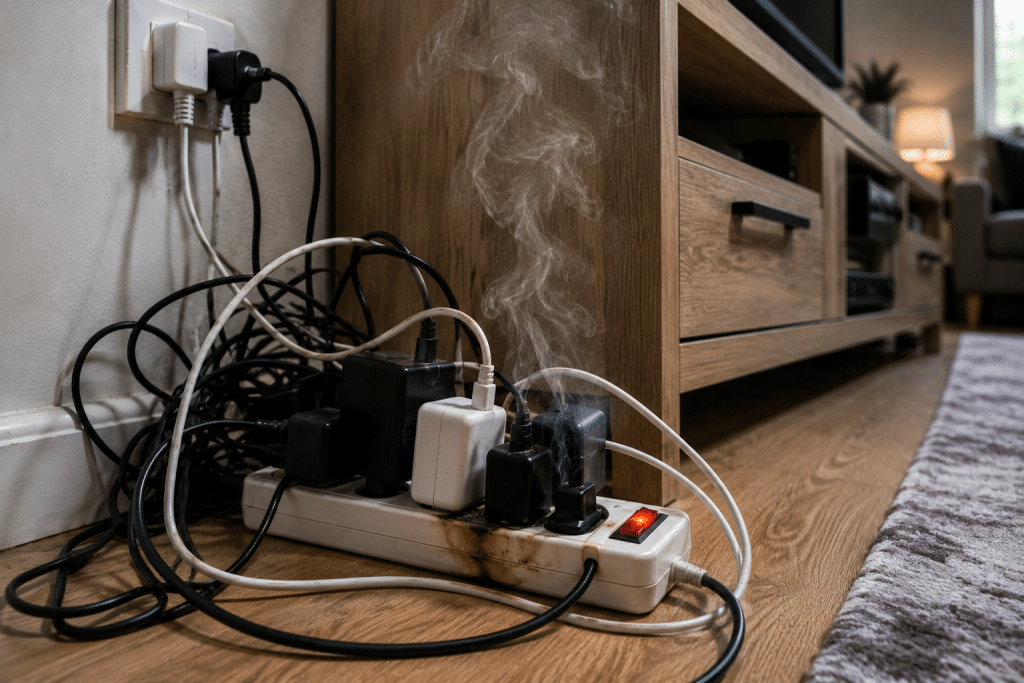
An overloaded extension lead.
A damaged electrical cable.
A candle left unattended.
A build-up of combustible materials near a heat source.
Individually, these may not seem particularly concerning. However, fire safety is often about recognising how small risks can combine to create larger problems.
When people assume a fire won’t happen to them, these warning signs are more likely to be dismissed or postponed until later.
Modern Homes Have More Potential Ignition Sources
Today’s homes contain more electrical devices than ever before.
Smartphones, laptops, gaming consoles, kitchen appliances, battery chargers, smart home devices, and rechargeable batteries are all part of modern life. While these technologies offer convenience, they also introduce additional potential ignition sources.
Most operate safely every day, which can reinforce the belief that there is little reason for concern.
However, it only takes one fault or failure to create a dangerous situation.
The growing number of electrical devices in our homes means fire safety awareness is arguably more important now than it was a generation ago.
Fire Develops Faster Than Many People Expect
Another reason the “it won’t happen to me” mindset is dangerous is that many people underestimate how quickly fire conditions can change.
A small fire can grow rapidly once it finds fuel and oxygen. Smoke can spread throughout a property long before flames become visible in every room.
In some situations, occupants may have only a short window of time to react and escape safely.
Because fires develop quickly, preparation beforehand is far more effective than trying to make decisions during an emergency.
Fire Safety Is Often About Preparation
People sometimes view fire safety measures as unnecessary because they hope they will never need them.
However, the purpose of fire safety is not to predict when a fire will happen. It is to ensure that if one does occur, the consequences are less severe.
Smoke alarms, fire doors, fire stopping, protected escape routes, and passive fire protection systems all exist for this reason.
Most of the time, these measures sit quietly in the background, unnoticed and unused. Their value only becomes obvious when they are needed.
Much like seatbelts in a car, their importance is not measured by how often they are used, but by what they can do when something goes wrong.
The Same Mindset Affects Buildings
The “it won’t happen to me” mentality is not limited to homeowners.
Businesses, landlords, and building owners can also fall into the trap of assuming that because a fire has never occurred before, existing safety measures are sufficient.
This can lead to delayed maintenance, overlooked inspections, damaged fire protection systems, or inadequate fire stopping being left unresolved.
Unfortunately, fire safety weaknesses often remain hidden until a fire exposes them.
By then, it may be too late to correct the problem.
Most Effective Fire Safety Is Invisible
One reason complacency develops is because successful fire safety is largely invisible.
People rarely see cavity barriers working. They don’t notice fire stopping behind walls.
They seldom think about smoke seals or compartmentation systems.
Because these measures operate in the background, it’s easy to forget they exist at all.
Yet these hidden systems are often the reason a fire remains contained rather than becoming a major incident.
Fire Safety Is About Managing Possibility, Not Probability
A common mistake is focusing solely on how likely a fire is to occur.
The reality is that fire safety is often more concerned with consequences than probability.
Even if the likelihood of a fire is relatively low, the potential impact can be severe. Injuries, loss of life, property damage, business interruption, and costly repairs can all result from a single incident.
Good fire safety practices recognise this and focus on reducing the consequences if the unexpected happens.
Final Thoughts
The belief that “it won’t happen to me” is understandable, but it can also be one of the most dangerous attitudes towards fire safety.
Fires are unpredictable. They can start in homes, businesses, and buildings that have never experienced a problem before. When people assume they are immune to risk, important precautions are often delayed, overlooked, or ignored altogether.
The safest approach is not to expect a fire, but to be prepared for the possibility of one.
Whether it’s testing smoke alarms, maintaining electrical systems, protecting fire compartments, or ensuring passive fire protection measures remain intact, small actions taken today can make a significant difference tomorrow.
Because when it comes to fire safety, preparation is always easier than regret.
For expert advice on fire protection and prevention measures, contact Martyn Young Fireproofing Consultancy on 07585 896648