

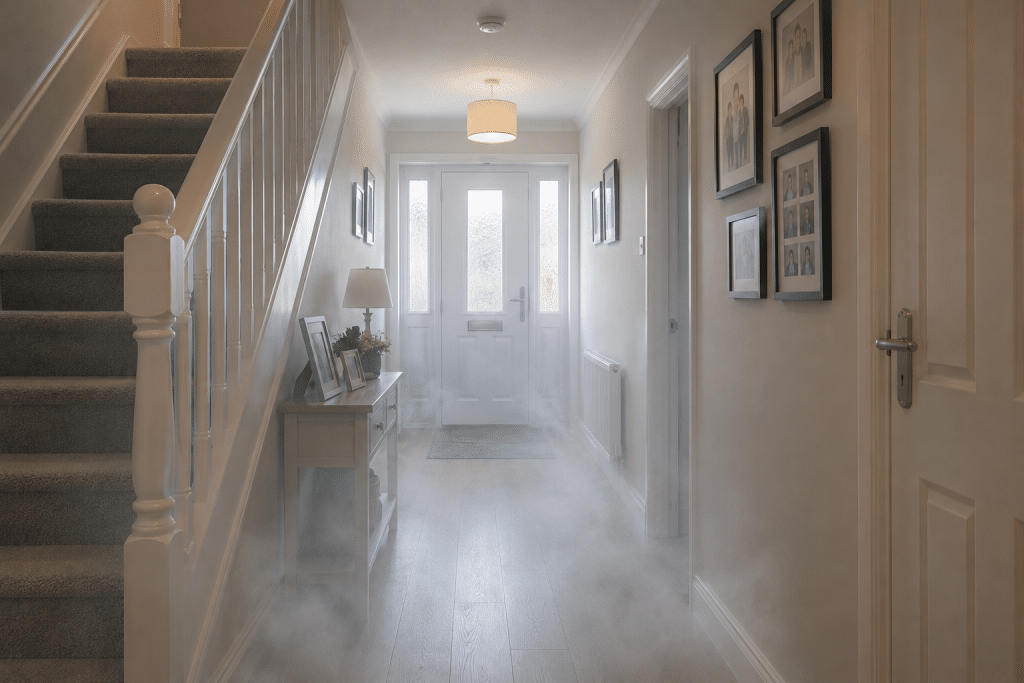
When people think about fire safety, they usually imagine flames, extreme heat, and visible damage caused by a fire. While these are certainly serious threats, one of the most dangerous aspects of a fire is often something that receives far less attention: cold smoke.
Unlike the thick, hot smoke associated with fully developed fires, cold smoke can spread through a building long before temperatures rise significantly. In many cases, it reaches occupants before flames are visible, creating serious risks to health, safety, and evacuation.
Understanding how cold smoke behaves is essential because it is often the first hazard people encounter during a fire and one of the reasons why smoke control measures are such an important part of modern fire protection.
What Is Cold Smoke?
Cold smoke refers to smoke produced during the early stages of a fire, before temperatures become high enough to generate significant heat throughout the surrounding area.
At this stage, combustion may still be developing, but smoke particles and toxic gases are already being released into the environment.
Because the smoke is relatively cool compared to the intense heat of a fully developed fire, it can travel differently throughout a building. Rather than remaining concentrated near the source, it can move through corridors, door gaps, ventilation routes, and concealed spaces, often affecting areas far away from the fire itself.
This means occupants may encounter dangerous smoke even when they are nowhere near visible flames.
Why Cold Smoke Is So Dangerous
One of the biggest misconceptions about fire safety is that flames are the greatest immediate threat.
In reality, smoke is often responsible for more injuries and fatalities than the fire itself.
Cold smoke can contain a mixture of harmful gases, microscopic particles, and toxic combustion products. Breathing these substances can impair judgement, reduce physical ability, and make it difficult for people to escape safely.
Because cold smoke often spreads before the fire becomes obvious, it can affect escape routes at a very early stage, reducing the time available for evacuation.
The danger is not always what people can see; it is what they may be breathing.
How Cold Smoke Travels Through Buildings
Cold smoke is remarkably effective at finding routes through a building.
Even small gaps around doors, walls, ceilings, and service penetrations can provide pathways for smoke movement. Once it enters corridors, stairwells, or ventilation systems, it can spread rapidly throughout the structure.
This is particularly concerning in larger buildings where occupants may be some distance from the room where the fire originated.
Without effective smoke control measures, smoke can move into escape routes long before occupants become aware that a fire has started.
In some cases, people may encounter smoke before they even hear an alarm.
Cold Smoke in Homes
Cold smoke presents risks in residential properties as well as commercial buildings.
Imagine a fire starting in a kitchen during the night. Before flames spread beyond the room, smoke may already be travelling through hallways, landings, and staircases.
If bedroom doors are left open, smoke can move more freely into sleeping areas. This can reduce visibility, affect breathing, and delay evacuation.
This is one reason why fire safety professionals often emphasise the importance of smoke alarms, closed internal doors, and protected escape routes.
The earlier smoke is detected and contained, the safer occupants are likely to be.
The Role of Smoke Seals
One of the most effective defences against cold smoke is the use of smoke seals.
Smoke seals are designed to restrict the movement of smoke around the edges of fire doors. Unlike intumescent fire seals, which expand when exposed to high temperatures, smoke seals begin working immediately.
By limiting the gaps around a door, they help reduce the amount of smoke that can pass from one area of a building to another.
This can help protect escape routes, maintain visibility, and provide occupants with more time to evacuate safely.
Although they are often overlooked, smoke seals play a critical role during the earliest stages of a fire.
Why Fire Compartmentation Matters
Smoke control is not just about doors.
Modern buildings use compartmentation to divide structures into separate fire-resistant sections. Walls, floors, ceilings, fire doors, and fire stopping systems all work together to limit the movement of both fire and smoke.
When compartmentation remains intact, smoke is far more likely to stay within a defined area rather than spreading freely throughout the building.
However, if gaps are left around pipes, cables, ducts, or other building services, smoke may bypass these barriers and spread into neighbouring compartments.
This is why properly installed fire stopping is such an important part of passive fire protection.
Reduced Visibility Creates Additional Risks
Cold smoke does not need to be thick and black to be dangerous.
Even relatively light smoke can reduce visibility, making it harder for occupants to locate exits, follow escape routes, or identify hazards.
In unfamiliar buildings, reduced visibility can quickly lead to confusion and disorientation.
People naturally move more slowly when they cannot see clearly, which can increase evacuation times and create additional risks during an emergency.
The combination of toxic gases and reduced visibility is one of the reasons smoke control is treated as a major fire safety priority.
Early Detection Is Essential
Because cold smoke often appears before significant heat or visible flames, early detection is critical.
Smoke alarms are designed to identify smoke particles and provide an early warning when a fire begins. This early warning can make a significant difference, particularly when occupants are asleep or located some distance from the source of the fire.
The sooner a fire is detected, the more time people have to escape and the greater the opportunity for emergency services to respond before conditions worsen.
Cold Smoke and Building Design
Modern fire safety design recognises the dangers posed by smoke as well as fire.
This is why building regulations often require smoke control measures alongside fire resistance measures. Fire doors, smoke seals, compartmentation systems, and protected escape routes all contribute to limiting smoke spread.
The goal is not simply to contain flames but to create safer conditions for evacuation and firefighting operations.
In many situations, controlling smoke can be just as important as controlling the fire itself.
Final Thoughts
Cold smoke is one of the most underestimated hazards associated with fire. It can spread through a building before flames become visible, affect escape routes, reduce visibility, and expose occupants to harmful gases long before they realise the severity of the situation.
This is why smoke alarms, smoke seals, fire doors, compartmentation, and fire stopping systems play such an important role in modern fire safety. Together, these measures help restrict smoke movement and provide valuable time for people to escape safely.
While flames often attract the most attention, it is important not to overlook the threat posed by smoke. In many fires, cold smoke is the first danger occupants encounter, and understanding how it behaves can help explain why effective smoke control is such a vital part of protecting lives and buildings.
For expert advice on fire protection and prevention measures, contact Martyn Young Fireproofing Consultancy on 07585 896648