

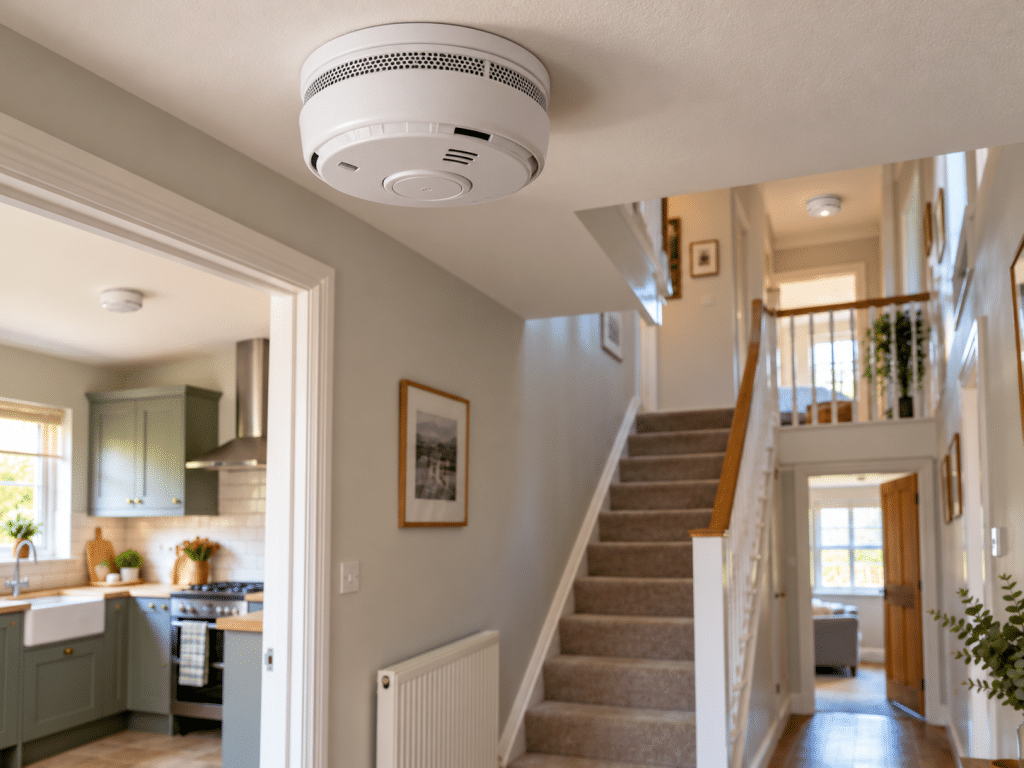
Smoke alarms are one of the simplest and most effective fire safety measures you can install in a home. They provide early warning when a fire starts, giving occupants valuable time to escape before smoke and heat become overwhelming.
However, many people are unsure how many smoke alarms a house actually needs. Some homes only have a single alarm fitted, while others may have alarms installed in the wrong locations or not enough coverage throughout the property.
The reality is that the number of smoke alarms required depends on the size, layout, and design of the home. Having the correct coverage is essential because fires and smoke can spread surprisingly quickly, particularly during the night when occupants are asleep.
Why Smoke Alarm Coverage Matters
A smoke alarm can only provide protection if it detects smoke early enough. If there are not enough alarms throughout the property, a fire may develop significantly before occupants are alerted.
Smoke does not spread evenly through a building. It rises naturally and can move rapidly through staircases, hallways, loft spaces, and open-plan areas. Depending on where a fire starts, smoke may not immediately reach a distant alarm.
This is why relying on a single alarm for an entire house is rarely sufficient. Proper coverage ensures that no matter where a fire begins, there is a much greater chance of early detection.
General Recommendations for Homes
In most modern homes, smoke alarms should be installed on every level of the property. At a minimum, this usually means:
- one alarm in the main circulation area on each floor,
- and additional protection near sleeping areas.
Hallways and landings are common installation points because they form part of the escape route through the house.
Larger homes, open-plan spaces, or properties with multiple bedrooms may require additional alarms to ensure smoke can be detected quickly enough throughout the building.
Why Bedrooms and Escape Routes Matter
Smoke alarms are especially important near bedrooms because fires that start at night are often the most dangerous. During sleep, people are far less likely to notice the early signs of a fire without an alarm system.
Installing alarms near sleeping areas helps ensure occupants are alerted as quickly as possible if smoke begins spreading through the property.
Escape routes such as hallways, staircases, and landings should also be protected because these areas are critical for safe evacuation during an emergency.
Should Kitchens Have Smoke Alarms?
Kitchens are one of the most common places for fires to start, but standard smoke alarms are not always suitable directly inside kitchens because cooking fumes can cause frequent false alarms.
Instead, heat alarms are often recommended for kitchens. These alarms respond to temperature increases rather than smoke particles, making them more suitable for cooking environments while still providing fire detection.
In many homes, a combination of smoke alarms and heat alarms offers the best overall protection.
The Benefits of Interlinked Alarms
One of the biggest improvements in modern fire safety is the use of interlinked smoke alarms.
With interlinked systems, if one alarm detects smoke, all alarms in the property activate at the same time. This is especially important in larger homes or multi-storey properties where occupants may not hear a single alarm sounding on another floor.
For example, if a fire starts downstairs at night, interlinked alarms ensure people sleeping upstairs are alerted immediately.
This significantly improves response time and increases the chances of safe evacuation.
Open-Plan Homes May Need More Protection
Modern open-plan layouts can change how smoke spreads through a building. Without walls and doors to contain smoke, it may travel more freely across large spaces.
In these layouts, additional alarms may be necessary to ensure coverage remains effective throughout the property.
Similarly, loft conversions, extensions, and larger homes may require extra protection because of the increased travel distance between rooms and escape routes.
Common Smoke Alarm Mistakes
One of the most common mistakes is assuming that installing a single smoke alarm is enough. In reality, inadequate alarm coverage can leave parts of the house unprotected.
Other common issues include:
- alarms being installed too close to kitchens or bathrooms,
- failing to test alarms regularly,
- removing batteries after false alarms,
- or installing alarms in poor locations where smoke may not reach quickly.
Even a good-quality alarm system may not perform effectively if it is poorly positioned or not maintained properly.
Maintenance Is Just as Important
Having enough smoke alarms is only part of the solution. Regular maintenance is essential to ensure they continue working correctly.
Smoke alarms should be tested regularly, cleaned when necessary, and replaced according to manufacturer recommendations. Batteries should also be checked frequently unless the system uses sealed long-life units or mains power with backup batteries.
Over time, smoke alarms can become less reliable as sensors age, which is why older units should not be ignored simply because they still appear functional.
Smoke Alarm Requirements Can Vary
Requirements for smoke alarms can differ depending on the type of property and local regulations.
Rental properties, flats, HMOs, and commercial buildings may all have specific fire safety requirements regarding alarm systems and detector placement.
In many cases, professional advice may be needed to ensure the property meets the appropriate standards.
Final Thoughts
There is no universal number of smoke alarms that suits every home. The right setup depends on the size and layout of the property, how the building is used, and where potential fire risks exist.
However, one thing is clear: relying on a single smoke alarm is rarely enough to provide effective protection throughout an entire house.
By ensuring alarms are installed on every level, positioned near escape routes and sleeping areas, and properly maintained, you can significantly improve fire safety within the home.
Smoke alarms may seem like small devices, but when installed correctly, they can provide the early warning that saves lives.
For expert advice on fire protection and prevention measures, contact Martyn Young Fireproofing Consultancy on 07585 896648