

Fire doors are an essential part of a building’s fire protection system, helping to slow the spread of fire and smoke while giving occupants valuable time to escape in an emergency. However, even a correctly installed fire door can become less effective if it isn’t properly maintained.
Whether you manage commercial premises in Gloucester, own a property in Cheltenham or are responsible for a building in Stroud, recognising the warning signs of a faulty fire door is important for maintaining a safe environment.
From damaged seals to doors that don’t close properly, several common issues can compromise fire protection.
In this guide, we’ll explore six problems to look out for when maintaining fire doors in Gloucestershire, why they matter and when professional advice may be needed.
Why Is Fire Door Maintenance So Important?
Fire doors are specifically designed and tested to resist the spread of fire for a defined period, commonly 30 or 60 minutes. They form part of a building’s passive fire protection system, helping to contain fire and protect escape routes such as corridors and stairwells.
However, a fire door is more than just the door itself. The frame, hinges, seals, hardware and any required self-closing device must all work together to provide the intended level of protection.
Over time, everyday use, accidental damage and general wear and tear can affect these components.
For businesses, landlords and property managers, regular checks can help identify potential problems before they compromise building safety.
6 Common Fire Door Problems to Look Out For
1. Fire Doors That Don’t Close Properly
One of the most common problems is a fire door that fails to close fully.
Where a fire door is required to self-close, it should shut completely into its frame without needing to be pushed or pulled. Faulty door closers, misaligned hinges or obstructions can all prevent this from happening.
A fire door that remains partially open may allow fire and smoke to spread between different areas of a building.
If a door sticks, doesn’t latch correctly or fails to close on its own when it should, the issue needs investigating.
2. Damaged or Missing Intumescent Seals
Intumescent seals play an important role in the performance of many fire doors.
When exposed to high temperatures, these seals expand to help close gaps between the door and its frame, restricting the spread of fire. Where required, smoke seals provide additional protection against smoke passing through the gaps.
Over time, seals can become damaged, loose or worn.
If seals are missing or deteriorating, they may need replacing with suitable products that are compatible with the fire door’s specification.
It’s worth remembering that some older fire doors were manufactured to different standards and may not have originally required the same seals as modern doors. Their suitability should be professionally assessed rather than assuming every older door needs upgrading.
3. Excessive Gaps Around Doors and Frames
Fire doors need to fit correctly within their frames to provide the intended level of protection.
If gaps around the edges of a door are too large, fire and smoke may pass through more easily.
Excessive gaps can develop because of incorrect installation, movement in the building or wear affecting hinges and frames.
The acceptable clearances depend on the particular fire door assembly and its tested specification.
If you notice unusually large or uneven gaps, it’s worth arranging an assessment to determine whether adjustments or remedial work are needed.
4. Damaged Hinges and Other Hardware
Hinges, handles, latches and other hardware are essential components of a fire door assembly.
Loose hinges, missing screws or damaged fittings can affect how the door operates and potentially compromise its fire resistance.
Replacing components with unsuitable alternatives can also create problems, even when the replacement appears to fit correctly.
Any repairs should use appropriately specified and compatible components to maintain the door’s required performance.
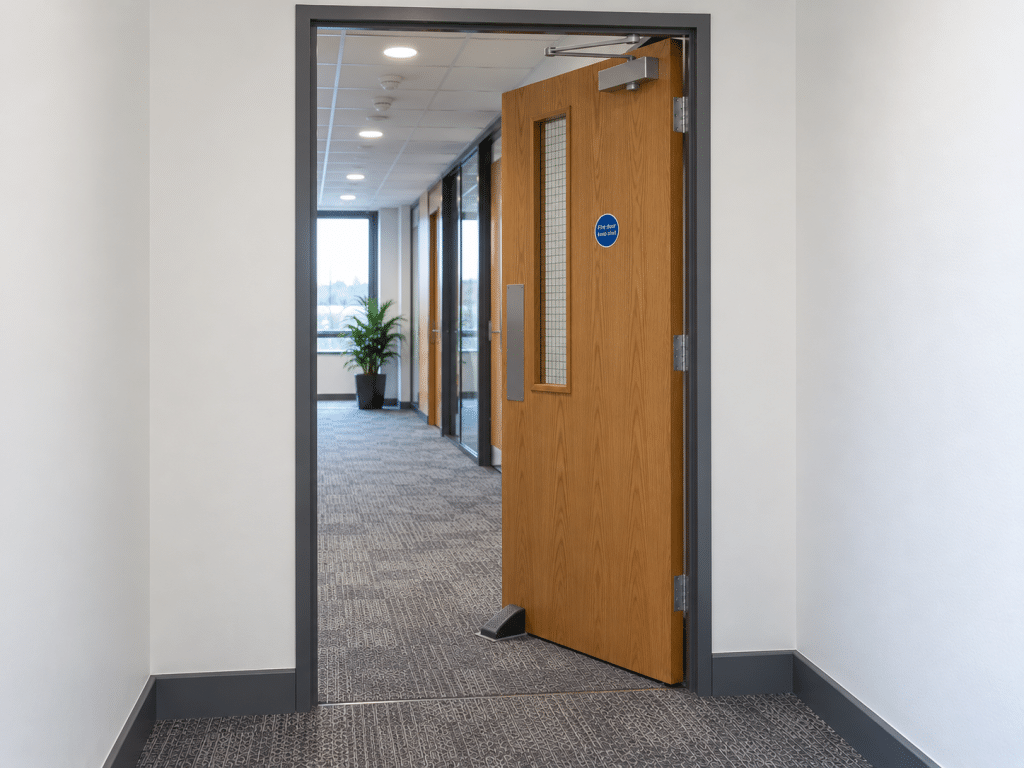
5. Fire Doors Being Wedged Open
In busy workplaces and communal buildings, fire doors are sometimes propped open to make access easier.
However, wedging open a fire door that is required to remain closed can prevent it from doing its job during an emergency.
Doors that need to be held open during normal use may be fitted with suitable automatic hold-open devices that release when triggered by the building’s fire detection system.
It’s important that doors aren’t held open using makeshift solutions such as wedges, furniture or other obstructions.
6. Unauthorised Alterations or Modifications
Making alterations to a fire door without considering its specification can significantly affect its performance.
Common examples include cutting holes for new locks, installing unsuitable glazing or changing the door’s hardware.
Even seemingly minor modifications can compromise the fire resistance of the complete assembly.
Before making alterations, it’s important to establish whether the proposed changes are compatible with the door’s tested design.
Using suitable products and experienced professionals can help ensure that any necessary modifications don’t undermine the intended fire protection.
How Often Should Fire Doors Be Checked?
Regular fire door checks help identify damage and maintenance issues before they become more serious.
The appropriate inspection frequency depends on the type of building, how frequently the doors are used and the findings of its fire risk assessment.
For example, fire doors in busy commercial buildings may experience greater wear and tear than those in areas with limited daily use.
There are also specific legal requirements for certain residential buildings. Under the Fire Safety (England) Regulations 2022, multi-occupied residential buildings over 11 metres must have communal fire doors checked at least every three months, while responsible persons must use best endeavours to check flat entrance doors at least annually.
These particular intervals don’t apply universally to every building, although appropriate maintenance remains essential wherever fire doors form part of the required fire safety precautions.
Routine visual checks can identify obvious faults, while more detailed inspections by competent specialists may be needed to assess the complete fire door assembly.
Should a Damaged Fire Door Be Repaired or Replaced?
Discovering a problem doesn’t automatically mean the entire fire door needs replacing.
Depending on the condition and specification of the door, certain defects may be resolved through suitable repairs or adjustments.
These might include replacing compatible seals, adjusting door closers or addressing problems with hinges and other hardware.
However, more significant damage to the door leaf, frame or critical components may mean replacement is necessary.
Older buildings can present additional challenges, particularly where retaining existing doors is desirable for architectural or conservation reasons.
A professional assessment can help establish whether repair, upgrading or replacement is the most appropriate solution, ensuring the necessary level of fire resistance is maintained.
Need Advice About Fire Doors in Gloucestershire?
Whether you’re responsible for a commercial property, managing residential accommodation or planning improvements to an existing building, keeping fire doors in good condition is an important part of building safety.
At Martyn Young Fireproofing Consultancy, we provide expert advice on fire protection and prevention measures. If you’ve noticed problems with your existing fire doors or need advice on improving your building’s fire protection, we’re here to help. Contact Martyn Young Fireproofing Consultancy on 07585 896648