

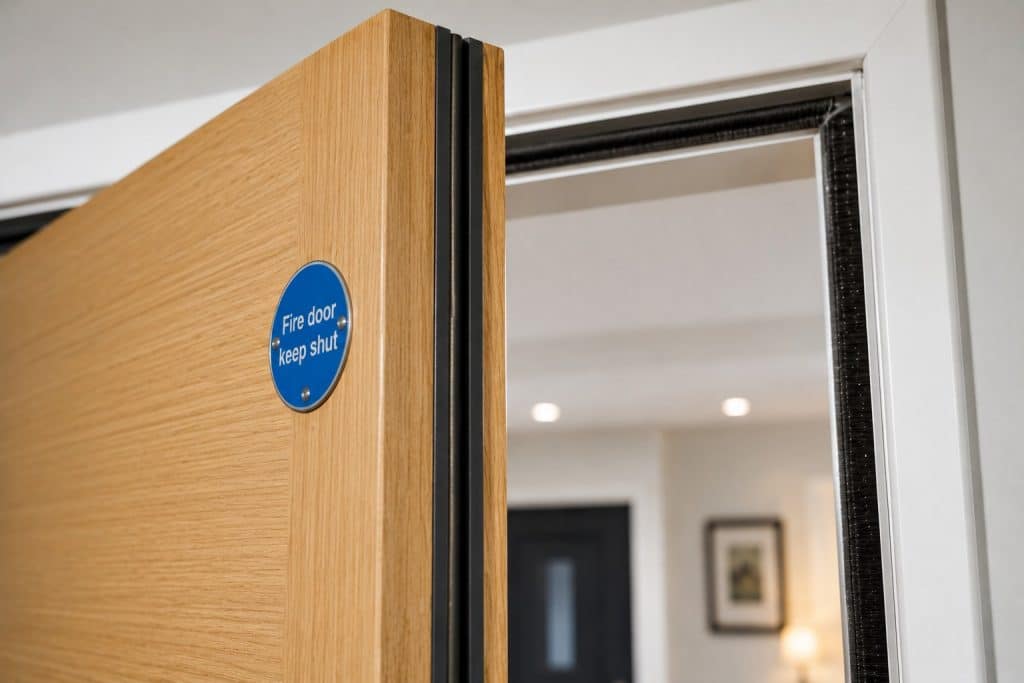
When it comes to fire doors and passive fire protection, the terms smoke seals and fire seals are often used together. Because they are commonly fitted into the same door assemblies, many people assume they are exactly the same thing.
While both are designed to improve fire safety, they actually perform different roles during a fire. One is primarily focused on stopping the spread of smoke, while the other is designed to resist the spread of fire and heat.
Understanding the difference between smoke seals and fire seals is important because both play a major part in protecting escape routes, slowing fire spread, and helping buildings meet fire safety requirements.
What Are Fire Seals?
Fire seals are designed to help prevent flames and extreme heat from spreading through the gaps around a fire door during a fire.
Most fire seals are made using intumescent materials. Under normal conditions, these seals remain compact and almost unnoticeable. However, when exposed to high temperatures, they react by expanding significantly.
As they expand, the seals fill the small gaps around the edges of the fire door. This helps block the movement of flames, heat, and hot gases between compartments within the building.
Without fire seals, these gaps could allow fire to spread much more quickly through corridors, stairwells, and escape routes.
What Are Smoke Seals?
Smoke seals are specifically designed to restrict the movement of smoke through door gaps, particularly during the early stages of a fire.
Unlike fire seals, smoke seals do not rely on high heat to activate. Instead, they work immediately by forming a physical barrier against smoke leakage around the edges of the door.
Smoke seals are commonly made from flexible brush or rubber-like materials fitted into the edges of fire doors or frames. These seals help limit the spread of cold smoke before temperatures become high enough to activate intumescent fire seals.
Because smoke can spread rapidly through a building long before flames arrive, smoke seals play a critical role in protecting escape routes and improving visibility during evacuation.
Why Smoke Is Often the Bigger Danger
Many people focus primarily on flames during a fire, but smoke is often the more immediate threat.
Smoke can spread through buildings very quickly, reducing visibility and filling escape routes with toxic gases. In many fires, smoke reaches occupants long before the flames themselves.
This is why smoke seals are so important. Even small gaps around a door can allow smoke to travel into stairwells, corridors, or adjoining rooms, potentially trapping occupants or making evacuation far more dangerous.
By helping contain smoke at an early stage, smoke seals provide valuable extra time for escape.
How Fire Seals and Smoke Seals Work Together
In many fire door systems, smoke seals and fire seals are combined into a single product fitted around the edges of the door.
During the early stages of a fire, the smoke seal begins limiting smoke movement immediately. As temperatures rise, the intumescent fire seal activates and expands to help block flames and heat.
Together, these systems provide layered protection throughout different stages of the fire.
This combination is particularly important in escape routes where both smoke control and fire resistance are essential for occupant safety.
Why Door Gaps Matter
The small gaps around a fire door may seem insignificant during everyday use, but during a fire they become critical points of vulnerability.
Without properly fitted seals, these gaps can allow:
- smoke to leak into escape routes,
- heat to transfer between compartments,
- flames to spread more rapidly through the building.
Even a high-quality fire door may not perform correctly if the gaps around it are not properly protected.
This is why correct installation and maintenance of both smoke seals and fire seals are so important.
What Happens If Seals Are Missing or Damaged?
Missing, damaged, or poorly fitted seals can significantly reduce the effectiveness of a fire door.
If smoke seals are worn or incomplete, smoke may spread through the building much earlier during a fire. If fire seals are damaged or missing, flames and heat may pass around the door far more quickly than intended.
Over time, seals may deteriorate due to wear, poor maintenance, painting over the seals, or building alterations. Because they are relatively small components, problems are sometimes overlooked during routine inspections.
However, these small details can have a major impact on fire safety performance.
Where Smoke and Fire Seals Are Commonly Used
Smoke and fire seals are most commonly associated with fire doors, but they are used in a wide range of buildings and applications.
You’ll often find them in:
- apartment buildings,
- commercial properties,
- schools,
- hospitals,
- hotels,
- and public buildings.
They are particularly important in areas designed to protect escape routes, such as stairwells, corridors, and communal entrances.
In many modern buildings, these seals form part of the overall passive fire protection strategy built into the structure itself.
How to Identify Smoke and Fire Seals
Fire seals are often fitted into grooves around the edge of a fire door or frame and may appear as thin strips running around the perimeter.
Smoke seals may look similar, although brush-style smoke seals are often easier to identify because of their visible bristles.
Combined smoke and fire seals are also common and may contain both intumescent material and a smoke-resistant brush or blade within the same strip.
If you are unsure whether a fire door has the correct seals fitted, it is always best to seek professional advice.
Final Thoughts
Smoke seals and fire seals may appear similar, but they perform different and equally important roles during a fire.
Smoke seals help control the spread of smoke during the early stages, while fire seals react to heat and help prevent flames and extreme temperatures from spreading through door gaps.
Together, they form a vital part of passive fire protection, helping protect escape routes, slow fire spread, and improve overall building safety.
Although they are small and often unnoticed, these seals play a major role behind the scenes. In many cases, the effectiveness of a fire door depends just as much on the seals around it as the door itself.
For expert advice on fire protection and prevention measures, contact Martyn Young Fireproofing Consultancy on 07585 896648