

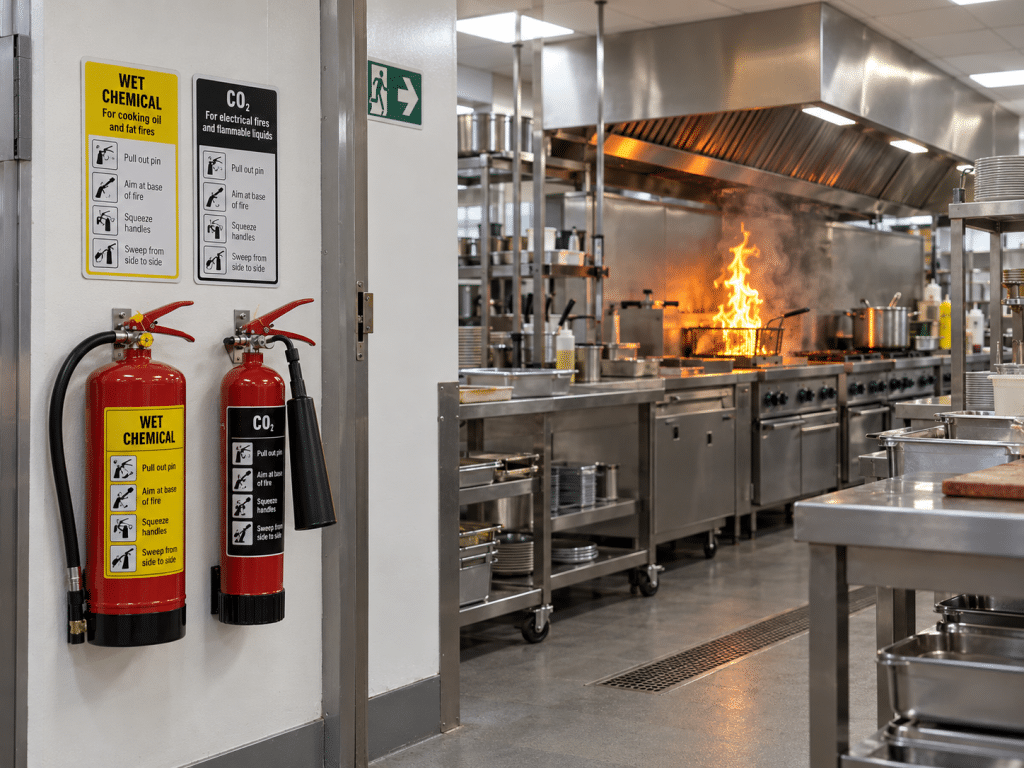
Fire extinguishers are designed to stop small fires before they become major emergencies. However, not all extinguishers work on every type of fire. In fact, using the wrong fire extinguisher can make a fire significantly worse, increase the risk of injury, and even create entirely new dangers.
Many people assume that any extinguisher is better than none at all, but fire extinguishers are specifically designed for different fire classes. Using the incorrect one can spread flames, cause explosions, damage electrical systems, or put the user at serious risk.
Understanding the differences between extinguisher types is an important part of fire safety and can make a critical difference during an emergency.
Why Different Fires Require Different Extinguishers
Not all fires burn in the same way. Fires involving paper or wood behave very differently from fires involving cooking oil, electrical equipment, or flammable liquids.
Because of this, fire extinguishers are designed to tackle specific types of fires safely and effectively. Each extinguisher contains different agents that work by cooling, smothering, or interrupting the chemical reaction of a fire.
Using the wrong extinguishing agent can sometimes react dangerously with the burning material rather than putting it out.
Using Water on an Electrical Fire
One of the most dangerous mistakes is using a water extinguisher on an electrical fire.
Water conducts electricity, which means there is a serious risk of electric shock if it comes into contact with live electrical equipment. In addition, the water may damage electrical systems and spread burning materials further.
Electrical fires should instead be tackled using equipment designed specifically for electrical risks, such as CO₂ extinguishers.
This is why understanding what type of fire you are dealing with is so important before attempting to use any extinguisher.
Using Water on a Cooking Oil Fire
Another common and extremely dangerous mistake is using water on a fire involving cooking oil or fat.
When water hits burning oil, it instantly turns to steam. This rapid expansion causes the burning oil to explode outward, creating a fireball that can spread flames across the kitchen in seconds.
This type of reaction is responsible for many serious burn injuries every year.
Small cooking oil fires are usually best dealt with using a fire blanket or a wet chemical extinguisher designed specifically for kitchen fires.
Using the Wrong Extinguisher Can Spread the Fire
Some extinguishers can unintentionally spread flames if used on the wrong type of fire.
For example, certain extinguisher agents may disturb burning liquids, causing them to splash or spread into a larger area. Instead of controlling the fire, this can increase its size and intensity.
In enclosed areas, incorrect extinguisher use may also reduce visibility or create panic, making evacuation more difficult.
This is why extinguisher selection is not just about having equipment available; it is about having the right equipment available.
Potential Risks to Personal Safety
Using the wrong extinguisher does not just affect the fire itself; it can also put the user in immediate danger.
Potential risks include:
- Electric shock
- Burns from spreading flames
- Inhalation of smoke or chemicals
- Reduced visibility during escape
- Explosion or flare-up of the fire
In many situations, people attempt to fight a fire without fully understanding the risks involved. If the wrong extinguisher is used, valuable escape time can also be lost.
Understanding Fire Extinguisher Types
Fire extinguishers are colour-coded and labelled to help identify their intended use.
Water Extinguishers
Typically used for fires involving materials such as wood, paper, and textiles.
Foam Extinguishers
Suitable for combustible materials and some flammable liquid fires.
CO₂ Extinguishers
Commonly used for electrical fires because they do not conduct electricity and leave no residue.
Powder Extinguishers
Can be used on multiple fire classes but may reduce visibility indoors and create clean-up issues.
Wet Chemical Extinguishers
Designed specifically for cooking oil and fat fires, often found in commercial kitchens.
Understanding these differences helps ensure the correct extinguisher is used safely.
Why Training and Awareness Matter
Many people own fire extinguishers but have never actually been shown how to use them properly. During an emergency, panic and confusion can make it difficult to choose the correct extinguisher quickly.
Basic fire safety awareness can make a significant difference. Knowing:
- what type of extinguishers are available,
- where they are located,
- and what fires they are suitable for,
can help prevent dangerous mistakes.
In workplaces, proper extinguisher training is especially important because staff may be expected to respond to small fires before emergency services arrive.
Knowing When NOT to Use an Extinguisher
Another important part of fire safety is recognising when not to fight a fire.
If a fire is spreading rapidly, producing large amounts of smoke, or blocking escape routes, evacuation should always take priority. Fire extinguishers are designed for small, manageable fires in their early stages, not major incidents.
No piece of equipment is worth risking personal safety for.
Final Thoughts
Fire extinguishers are incredibly valuable fire safety tools, but only when they are used correctly. Using the wrong extinguisher can worsen a fire, create additional hazards, and put lives at risk.
Understanding the differences between extinguisher types and the fires they are designed for is an essential part of fire safety awareness. Whether at home or in the workplace, having the correct equipment and knowing how to use it properly can make all the difference during an emergency.
In fire safety, acting quickly is important, but acting correctly is even more important.