

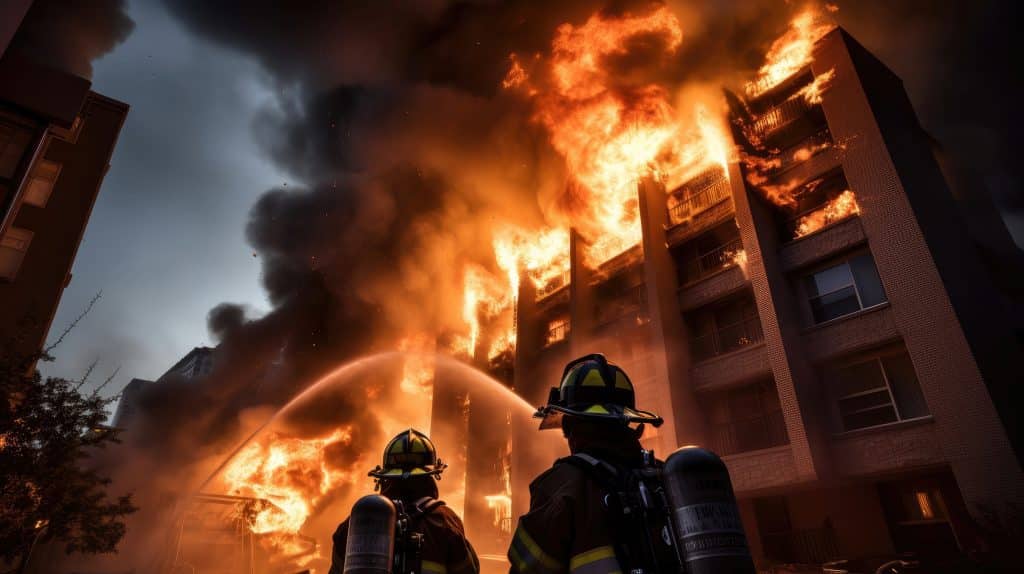
Fires can start suddenly and spread quickly, causing devastating damage to buildings, businesses, and homes. While news reports often focus on fires that result in major destruction, what is less widely discussed is how often fire protection systems prevent fires from becoming catastrophic.
Every year, a combination of fire safety measures, from alarms and extinguishers to passive fire protection systems, helps contain fires, protect structures, and save lives. Without these systems in place, many fires that are quickly controlled today could instead result in total building loss.
In this article, we’ll explore how fire protection works and why it plays such a critical role in protecting buildings every year.
The Purpose of Fire Protection
The goal of fire protection is not always to stop fires from starting. Instead, it is designed to control how a fire develops and spreads, giving occupants time to escape and emergency services time to respond.
Fire protection strategies generally focus on three key objectives:
-
Early detection of fire
-
Limiting the spread of flames and smoke
-
Maintaining the structural stability of the building
When these systems work together effectively, they significantly reduce the damage a fire can cause.
Early Detection Prevents Fires from Escalating
One of the most effective ways to limit fire damage is to detect the fire as early as possible.
Smoke alarms and fire detection systems alert occupants when smoke or heat is detected, allowing people to respond quickly. Early detection can mean the difference between a small incident that is easily controlled and a fire that spreads throughout the building.
In many cases, alarms allow occupants to:
-
Use fire extinguishers on small fires
-
Evacuate safely before conditions become dangerous
-
Call emergency services sooner
These early warnings help prevent fires from reaching a stage where they become uncontrollable.
Fire Compartmentation Limits Fire Spread
Another major part of fire protection is compartmentation. Buildings are designed with fire-resistant walls, floors, and doors that divide the structure into separate compartments.
The purpose of this design is to contain the fire within a limited area. If a fire starts in one room, fire-resistant barriers slow its movement into other parts of the building.
This helps protect:
-
Escape routes such as stairwells and corridors
-
Adjacent rooms and floors
-
Structural elements that support the building
Without compartmentation, fire and smoke could spread rapidly throughout a structure, making evacuation far more dangerous.
Passive Fire Protection Works Automatically
Many fire protection systems are designed to work automatically without human intervention. These are known as passive fire protection systems.
Examples include:
-
Fire doors
-
Intumescent seals
-
Fire-stopping materials around pipes and cables
-
Fire-resistant walls and floors
-
Intumescent coatings on structural elements
These systems are built into the structure and activate naturally when exposed to heat.
For example, intumescent materials expand when heated, sealing gaps that could allow flames or smoke to pass through. This helps maintain the integrity of fire compartments and prevents fire from spreading quickly.
Because these systems do not rely on power or manual operation, they provide reliable protection during emergencies.
Structural Fire Protection Prevents Collapse
In some buildings, especially those with steel frames, fire protection systems also help maintain the structural stability of the building.
Materials such as intumescent coatings, fire-resistant boards, or spray-applied fireproofing protect structural elements from high temperatures. By slowing the heating process, these materials help the structure maintain its strength for longer.
This is critical because it allows:
-
Occupants to evacuate safely
-
Firefighters to enter and control the fire
-
The building to remain standing long enough to prevent collapse
Structural fire protection is therefore an essential part of modern building safety.
Fire Safety Equipment Helps Control Small Fires
In addition to built-in protection systems, fire safety equipment plays a vital role in stopping small fires before they grow.
Equipment such as fire extinguishers and fire blankets can allow occupants to deal with small fires in their early stages. Many fires that start in kitchens, workshops, or offices can be quickly contained when the right equipment is available.
Of course, these tools should only be used if it is safe to do so. Evacuation should always remain the priority.
Fire Protection Reduces Property Damage
While the primary purpose of fire protection is to save lives, it also helps reduce damage to buildings and property.
When fires are detected early and contained within a limited area, the damage is often restricted to a single room or section of a building. This can dramatically reduce repair costs and downtime.
For businesses, effective fire protection can mean the difference between minor disruption and permanent closure.
The Importance of Maintenance and Inspection
Fire protection systems are only effective if they are properly maintained.
Regular inspections help ensure that:
-
Fire doors close correctly
-
Smoke alarms are working
-
Fire-stopping materials remain intact
-
Fire safety equipment is accessible and functional
Over time, renovations, new services, or building modifications can compromise fire protection systems. Regular checks help ensure that these systems continue to perform as intended.
Final Thoughts
Every year, fire protection systems prevent countless fires from becoming major disasters. Through early detection, fire compartmentation, structural protection, and the availability of fire safety equipment, buildings are far better prepared to withstand fire emergencies.
Although these systems often go unnoticed during everyday use, they play a crucial role in protecting lives and property. When properly designed, installed, and maintained, fire protection measures can dramatically reduce the impact of fires and help ensure that buildings remain safe.
Fire protection may not always be visible, but its impact is felt every time a fire is contained before it can spread.
For expert advice on fire protection and prevention measures, contact Martyn Young Fireproofing Consultancy on 07585 896648