

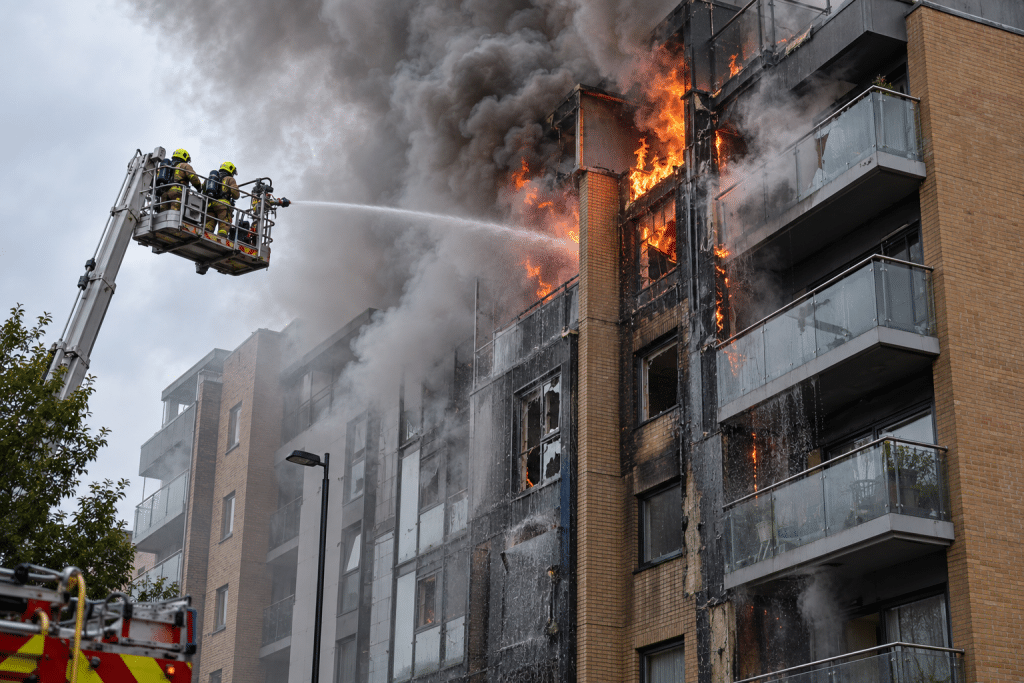
When people think about fire safety in buildings, they often focus on obvious things like smoke alarms, fire extinguishers, or fire doors. However, one of the most overlooked dangers can be something much smaller, gaps in walls, floors, and ceilings.
Even a small opening around pipes, cables, or ductwork can significantly increase the risk of fire spreading through a building. These gaps may seem harmless, but during a fire they can become pathways for flames, heat, and smoke to travel quickly between rooms and floors.
In this article, we’ll explain why small gaps can be such a serious fire risk and how proper fire stopping and sealing can prevent them from becoming a problem.
How Fires Spread Through Buildings
Modern buildings are designed with fire compartmentation in mind. This means dividing a structure into separate sections using fire-resistant walls, floors, and doors. The goal is to contain a fire within one compartment long enough for people to escape and emergency services to respond.
However, this system only works if those barriers remain fully sealed and intact.
When gaps are created, even very small ones, the compartmentation system can be compromised. Fire and smoke can pass through these openings and spread rapidly to other areas of the building.
Why Even Small Gaps Are Dangerous
A gap doesn’t need to be large to create a serious problem.
In fact, openings just a few millimetres wide can allow hot gases and smoke to pass through under pressure. During a fire, these gases can reach extremely high temperatures and ignite materials in neighbouring rooms.
Small gaps can allow:
-
Smoke to travel quickly into escape routes
-
Toxic gases to spread throughout the building
-
Heat to weaken structural components in other areas
-
Flames to reach combustible materials beyond the original fire
Because smoke travels faster than flames, these gaps can become dangerous within minutes of a fire starting.
Common Places Where Gaps Appear
Many of these openings are created during normal construction or renovation work when services need to pass through fire-rated walls and floors.
Typical examples include:
-
Pipes passing through walls or floors
-
Electrical cables and conduits
-
Ventilation ducts
-
Data cabling installations
-
Structural joints or movement gaps
-
Poorly sealed wall penetrations
Without proper sealing, these service penetrations create a direct route for fire and smoke to spread between compartments.
The Role of Fire Compartmentation
Fire compartmentation is designed to slow down the spread of fire, not necessarily stop it completely. Walls and floors may be rated for 30, 60, 90, or 120 minutes of fire resistance, giving occupants valuable time to evacuate.
However, if these barriers contain unsealed openings, their fire rating can be dramatically reduced.
For example, a wall designed to withstand fire for 60 minutes may fail much sooner if heat and smoke can pass freely through service gaps.
Maintaining the integrity of these barriers is therefore essential to preserving the building’s fire safety strategy.
How Fire Stopping Prevents Fire Spread
The solution to this problem is fire stopping, the process of sealing gaps and penetrations using materials designed to resist fire and smoke.
Fire stopping products are specifically tested to restore the fire resistance of walls and floors after services have been installed.
Common fire stopping solutions include:
-
Fire-rated sealants
-
Intumescent materials
-
Fireproof expanding foam
-
Fire collars for pipes
-
Fire-resistant boards or wraps
Many of these materials contain intumescent technology, which expands when exposed to heat, sealing gaps and preventing flames or smoke from passing through.
Smoke: The Hidden Danger
While flames are often the most visible part of a fire, smoke is usually the greater threat.
Smoke contains toxic gases such as carbon monoxide and can spread through buildings very quickly, especially through small openings in walls and ceilings.
Unsealed penetrations allow smoke to enter corridors, stairwells, and other escape routes, making evacuation far more dangerous.
Proper fire stopping helps to control smoke movement and protect safe exit routes.
Why Inspections and Maintenance Matter
Gaps in fire compartments often appear over time as buildings are modified. New cables may be added, pipes rerouted, or equipment installed, leaving previously sealed areas exposed.
Because of this, regular fire safety inspections are essential.
Building owners and responsible persons should ensure that:
-
Service penetrations are properly sealed
-
Fire stopping materials remain intact
-
Any new installations are correctly fire sealed
-
Fire compartment walls and floors are not compromised
Addressing these issues early can prevent serious problems in the event of a fire.
Final Thoughts
Small gaps in walls, floors, and ceilings may seem insignificant, but during a fire they can have major consequences. These openings allow heat, smoke, and flames to bypass fire-resistant barriers, undermining the entire fire protection strategy of a building.
Proper fire stopping ensures that fire compartments remain effective, slowing the spread of fire and giving people more time to escape safely.
In fire safety, it’s often the smallest details that make the biggest difference.
Ensuring that every gap is properly sealed is a simple but essential step in protecting buildings, property, and lives.
For expert advice on fire protection and prevention measures, contact Martyn Young Fireproofing Consultancy on 07585 896648