

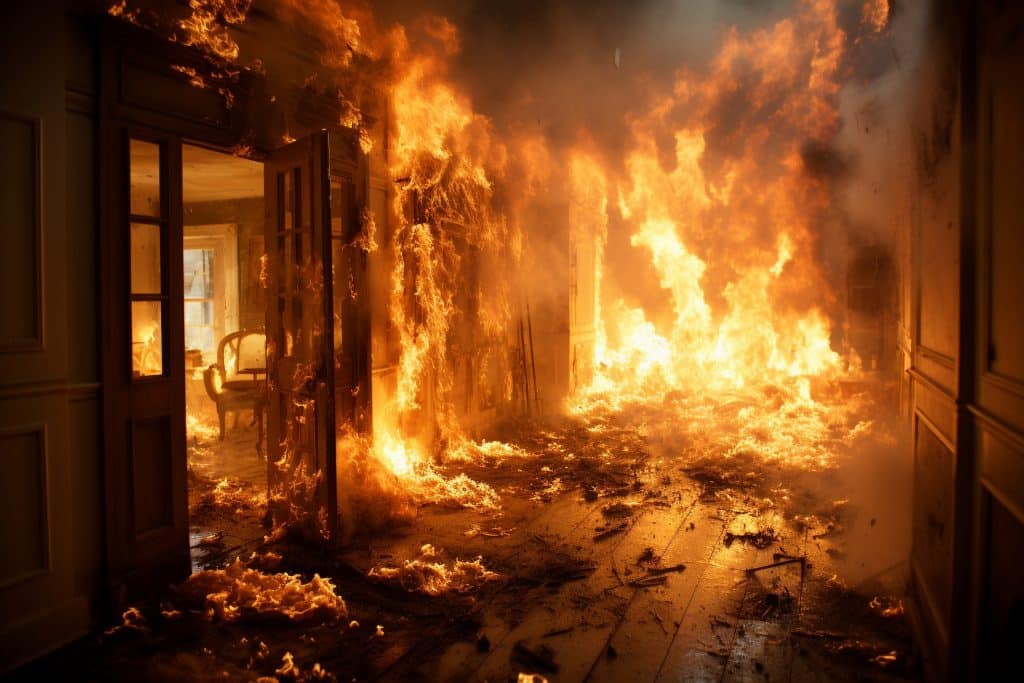
When people imagine a house fire, they often picture flames slowly spreading from one object to another. In reality, fires can change from manageable to unsurvivable in a matter of seconds.
One of the most dangerous, and least understood stages of a fire is called flashover.
Understanding what flashover is, how it happens, and why it’s so deadly could quite literally save your life.
What Is Flashover?
Flashover is the point in a fire where nearly all combustible materials in a room ignite almost simultaneously.
Instead of a single burning item (like a sofa or a pan), the entire room erupts into flames at once. Temperatures soar, visibility disappears, and survival becomes extremely unlikely.
Once flashover occurs, a room is fully involved in fire, and escape is usually impossible.
How Does Flashover Happen?
Flashover isn’t sudden or random; it’s the result of a fire developing in stages.
1. A Fire Starts
This could be from:
-
Unattended cooking
-
A cigarette
-
Faulty electrics
-
A candle or a heater
Initially, only one object is burning.
2. Heat Builds Rapidly
As the fire burns, it releases heat that rises and spreads across the ceiling. This heat:
-
Warms surrounding furniture and materials
-
Releases flammable gases from items that aren’t yet burning
At this stage, the fire may still look small, but danger is escalating fast.
3. Everything Reaches Ignition Temperature
Once the room reaches around 500–600°C, those flammable gases ignite all at once.
This is flashover.
Within seconds:
-
Flames roll across the ceiling
-
Furniture, curtains, flooring, and fittings ignite together
-
Temperatures can exceed 1,000°C
How Fast Can Flashover Occur?
In modern homes, flashover can occur in as little as 3–5 minutes from ignition.
Why so fast?
-
Modern furniture often contains synthetic materials that burn hotter and faster
-
Open-plan layouts allow heat to spread more quickly
-
Fires grow faster than many people expect
This is why early detection is absolutely critical.
Why Flashover Is So Deadly
Flashover is usually unsurvivable for anyone still in the room.
Here’s why:
-
Temperatures become instantly lethal
-
Toxic smoke fills the space before flames reach floor level
-
Visibility drops to zero
-
Escape routes are overwhelmed by fire
Many fire-related deaths occur before flames ever touch a person, due to smoke inhalation and heat exposure during this stage.
Warning Signs Flashover May Be Imminent
Flashover doesn’t come with a countdown timer, but there are warning signs:
-
Smoke rapidly thickening and turning dark
-
Extreme heat felt at floor level
-
Flames appearing at ceiling height
-
Windows blackening or cracking
-
Smoke “rolling” or pulsing across the ceiling
If you notice any of these signs, get out immediately. Do not attempt to fight the fire.
Can Fire Extinguishers Stop Flashover?
Sometimes, but only very early.
A fire extinguisher can help before flashover if:
-
The fire is small and contained
-
You have the correct extinguisher
-
You act immediately and confidently
Once heat has built up across the room, attempting to fight the fire becomes extremely dangerous.
Rule of thumb: If the fire is above shoulder height, spreading rapidly, or producing thick smoke, evacuate.
How Smoke Alarms Prevent Flashover Deaths
Smoke alarms don’t stop flashover, but they give you time to escape before it happens.
Early warning is the single most effective defence against flashover.
To maximise protection:
-
Install smoke alarms on every floor of your home
-
Use heat alarms in kitchens
-
Choose interlinked alarms so all alarms sound together
-
Test alarms weekly
-
Replace units every 10 years
Those extra seconds of warning can mean the difference between safe escape and disaster.
Why Closing Doors Matters
Closed doors can delay flashover and slow fire spread dramatically.
A closed internal door can:
-
Reduce oxygen feeding the fire
-
Contain heat and smoke
-
Keep escape routes viable for longer
This is why fire safety professionals strongly recommend closing bedroom and living room doors at night.
What This Means for Homes & Workplaces
Flashover highlights a critical truth: fires don’t give you much time.
Whether at home or at work, safety depends on:
-
Early detection
-
Clear escape routes
-
Proper equipment
-
Knowing when not to fight a fire
Fire safety isn’t about bravery; it’s about preparation and fast decision-making.
Final Thoughts
Flashover is one of the most dangerous stages of a fire, and one that most people don’t realise exists until it’s too late.
Understanding how quickly a fire can escalate reinforces why:
-
Smoke alarms matter
-
Fire doors save lives
-
Escape plans should never be ignored
-
Fire safety equipment must be ready before an emergency
The goal is never to face flashover, but to escape long before it happens.
Want to Reduce Your Fire Risk?
Contact Martyn Young Fireproofing Consultancy today on 07585 896648 for expert advice on fire protection and prevention measures.