

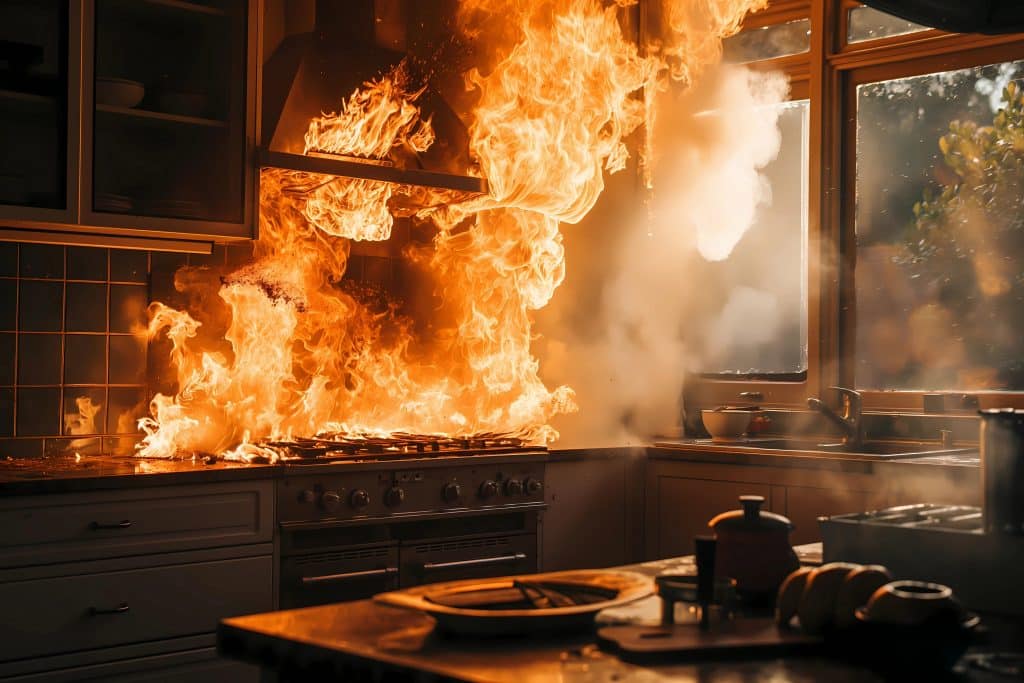
When people think about house fires, they often imagine flames starting in a fireplace or from faulty wiring hidden behind the walls. While these can certainly cause fires, statistics and fire investigations consistently point to one area of the home as the most common and dangerous place for fires to start.
That room is the kitchen.
Cooking-related incidents are responsible for a large proportion of domestic fires, making the kitchen the highest-risk area in most homes. Understanding why this room poses such a risk, and how to reduce that risk, can help protect your home, your property, and most importantly, the people inside it.
Why the Kitchen Is the Highest Fire Risk
The kitchen combines several elements that make it particularly vulnerable to fire.
First, there are multiple heat sources such as ovens, hobs, grills, toasters, and microwaves. These appliances generate high temperatures and can ignite nearby materials if left unattended.
Second, kitchens contain flammable items, including cooking oils, paper towels, packaging, wooden utensils, and cleaning products. When these materials come into contact with heat or open flames, they can ignite quickly.
Finally, cooking often requires constant attention. Even stepping away for a few minutes can allow food to overheat, oil to catch fire, or appliances to malfunction.
Because of these factors, many kitchen fires start from simple situations like forgotten pans, overheated oil, or items left too close to the hob.
The Dangers of Cooking Oil Fires
One of the most dangerous types of kitchen fires involves cooking oil or fat.
When oil overheats, it can reach its ignition point and burst into flames. This type of fire spreads rapidly and burns at extremely high temperatures.
Attempting to extinguish an oil fire with water can make the situation much worse. Water instantly turns to steam when it hits burning oil, causing the flaming oil to explode outward in a fireball.
For this reason, it is important to use the correct equipment, such as a fire blanket, or to turn off the heat source if it is safe to do so.
Common Causes of Kitchen Fires
Several everyday habits can increase the risk of a fire starting in the kitchen.
Some of the most common causes include:
-
Leaving cooking unattended, even briefly
-
Overheating oil or grease
-
Clutter around the hob, such as tea towels or packaging
-
Faulty electrical appliances
-
Using damaged cables or overloaded sockets
-
Flammable items placed near heat sources
Many kitchen fires start as small incidents but can escalate quickly if not detected early.
Other High-Risk Rooms in the Home
While the kitchen is usually the most dangerous room for fire risk, other parts of the home can also pose hazards.
Living Rooms
Living rooms often contain electrical equipment such as televisions, game consoles, chargers, and heaters. Faulty wiring, overloaded sockets, or damaged devices can start fires.
Soft furnishings like sofas and curtains can also fuel a fire once it begins.
Bedrooms
Bedrooms may seem like low-risk areas, but electrical devices such as phone chargers, heated blankets, and extension leads can create fire hazards, especially when used overnight.
Smoking in bed or leaving candles unattended can also increase the risk.
Utility Rooms
Appliances such as tumble dryers and washing machines can overheat or develop electrical faults, particularly if filters are not cleaned regularly.
Lint build-up in tumble dryers is a well-known fire risk.
How to Reduce Fire Risk in the Kitchen
Although the kitchen presents the highest fire risk in most homes, there are simple steps you can take to improve safety.
Stay With Cooking
Never leave cooking unattended, particularly when frying or using oil.
Keep the Hob Area Clear
Avoid placing flammable materials such as tea towels, packaging, or wooden utensils near the cooking surface.
Maintain Appliances
Regularly check kitchen appliances and cables for signs of damage.
Use the Right Fire Safety Equipment
Keeping a fire blanket in the kitchen can allow you to quickly smother small fires, particularly those involving cooking oils.
Install Heat Alarms
Because smoke alarms can trigger from cooking fumes, kitchens often use heat detectors, which activate when the temperature rises rapidly.
These detectors provide a warning without causing frequent nuisance alarms.
The Importance of Early Detection
Even a small fire can become dangerous in a matter of minutes. Early detection is one of the most effective ways to prevent fires from spreading.
Installing alarms near high-risk areas ensures that any fire is detected quickly, allowing occupants to respond or evacuate safely.
Modern alarm systems can also be interlinked, meaning that when one alarm sounds, all alarms in the house activate. This helps ensure everyone in the building is alerted immediately.
Final Thoughts
While fires can start in any room, the kitchen remains the most dangerous area in the home for fire risk due to the combination of heat, appliances, and flammable materials.
Fortunately, most kitchen fires are preventable with simple precautions. Staying attentive while cooking, maintaining appliances, and having the right fire safety equipment nearby can greatly reduce the chances of a fire starting.
Fire safety at home often comes down to awareness and preparation. By understanding where the greatest risks are and taking steps to address them, you can help keep your home and family safe.
For expert advice on fire protection and prevention measures, contact Martyn Young Fireproofing Consultancy on 07585 896648