

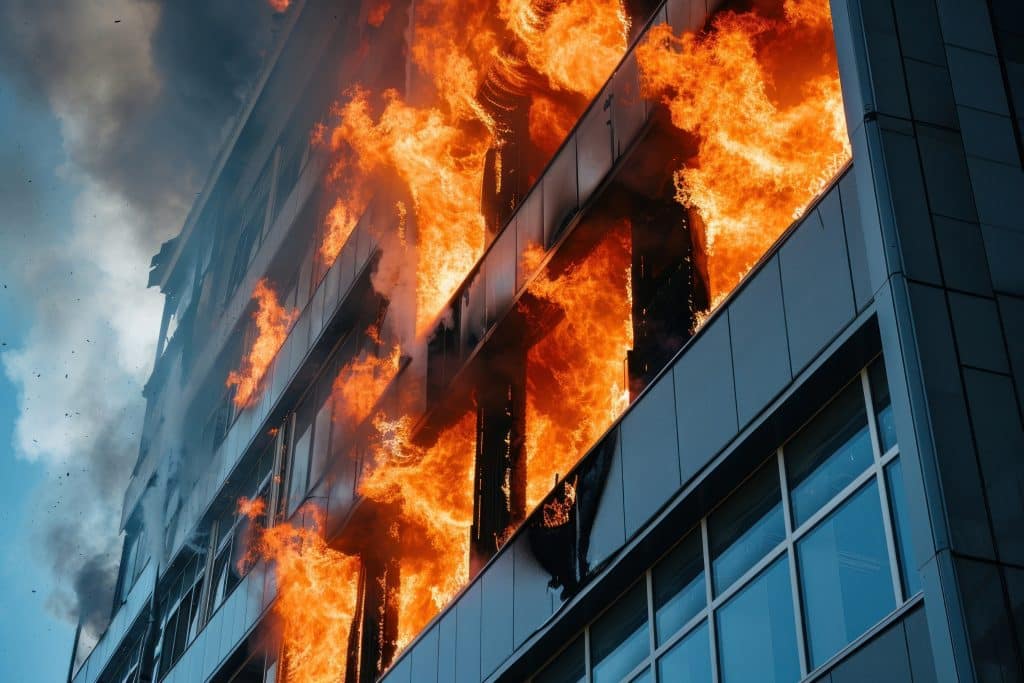
When it comes to passive fire protection in buildings, both fire grilles and fire dampers play essential roles in preventing the spread of flames and smoke. While they might seem similar at first glance—both often found in walls, ceilings, or ductwork—their functions, designs, and installation requirements are quite different.
Whether you’re responsible for building safety or simply curious about fire protection systems, understanding the difference between fire grilles and fire dampers is key to ensuring the right solution is used in the right place.
What Is a Fire Grille?
A fire grille is a vent covering designed to allow airflow under normal conditions while sealing off completely in the event of a fire. It typically contains intumescent material, which expands when exposed to high temperatures. This expansion closes off the grille, blocking the passage of flames and smoke.
Key Features:
-
Installed in doors, walls, floors, or ceilings
-
No moving mechanical parts
-
Uses intumescent material to react to fire
-
Maintains airflow for ventilation under normal use
-
Closes automatically during a fire without external intervention
Typical Uses:
Fire grilles are often used in areas where passive airflow is needed, but fire compartmentalisation must be maintained, like cross-ventilation in doors or walls between fire-rated zones.
What Is a Fire Damper?
A fire damper is a mechanical device installed inside HVAC ductwork. When the ambient temperature reaches a certain level (usually around 72°C), a fusible link melts, triggering a set of metal blades to close, sealing the duct and preventing the passage of fire and smoke.
Key Features:
-
Installed in ductwork, especially in air conditioning or ventilation systems
-
Has mechanical moving parts
-
Usually uses a fusible link or electric actuator
-
Can be motorised and integrated with fire alarm systems
-
Requires regular testing and maintenance
Typical Uses:
Fire dampers are essential wherever ducts pass through fire-resisting barriers (walls or floors), as these ducts could otherwise allow fire and smoke to bypass compartmentation.
Fire Grille vs Fire Damper: Key Differences
| Feature | Fire Grille | Fire Damper |
|---|---|---|
| Application | Static openings in walls/doors | HVAC duct systems |
| Activation Method | Intumescent material (expands with heat) | Fusible link or motorised actuator |
| Moving Parts | None | Yes (blade mechanism) |
| Airflow | Natural/passive ventilation | Controlled mechanical ventilation |
| Maintenance | Low maintenance | Requires periodic testing and servicing |
| Regulatory Role | Fire compartment integrity | HVAC fire/smoke containment |
Do You Need Both?
In many commercial and multi-residential buildings, both fire grilles and fire dampers are used in different parts of the structure. For instance, you might find fire dampers installed in ductwork in the ceiling, while fire grilles are used in office doors or partition walls to allow airflow between rooms while still preserving fire resistance.
Their usage should be determined based on:
-
Building regulations (such as Approved Document B in the UK)
-
Fire risk assessments
-
Ventilation system design
-
Fire compartmentation strategy
Always consult a fire safety professional or building services engineer when selecting fire protection components.
Final Thoughts
Although fire grilles and fire dampers both contribute to fire protection, they are not interchangeable. Fire grilles are ideal for passive openings that need to be sealed automatically in a fire, while fire dampers are crucial for active systems like HVAC that can otherwise transport fire and smoke rapidly through a building.
Understanding the distinction ensures that your building meets regulatory compliance, minimises risk, and provides maximum protection in the event of a fire.
For expert advice on fire protection and prevention measures, contact Martyn Young Fireproofing Consultancy on 07585 896648