

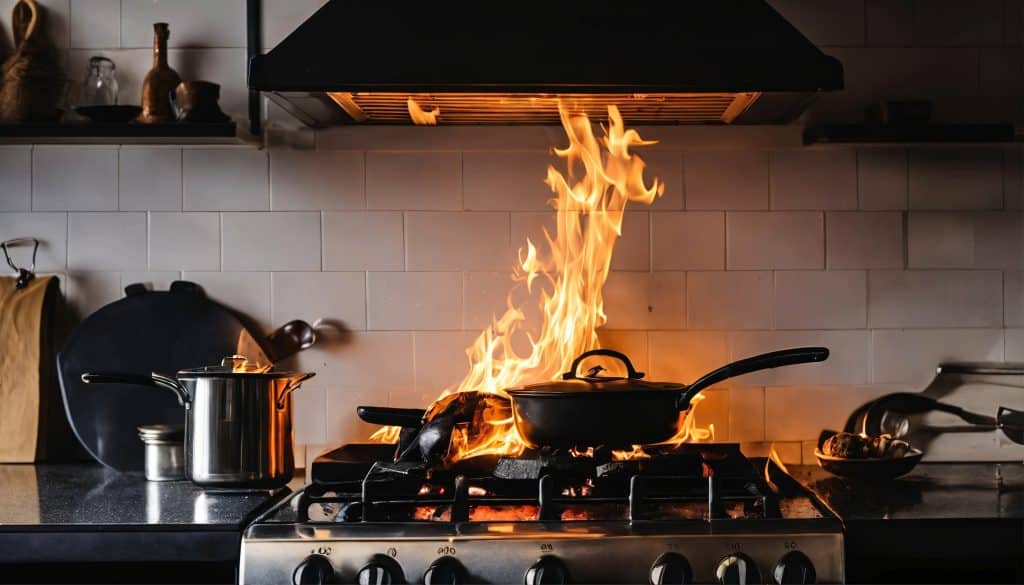
In a fire emergency, knowing which piece of equipment to grab and how to use it correctly can be the difference between a minor incident and a major disaster.
Both fire blankets and fire extinguishers are crucial tools in your fire safety setup, but they’re not interchangeable. Each is designed for different types of fires, and using the wrong one, or using it incorrectly, can make the situation worse.
So, when a fire breaks out, how do you know whether to reach for the blanket or the extinguisher first?
Let’s break it down.
The Basics: What’s the Difference?
Fire Blanket
A fire blanket is a sheet made from fire-resistant materials, typically glass fibre. It works by smothering flames and cutting off the oxygen supply to the fire.
Best for:
-
Small pan fires (e.g. frying oil or chip pans)
-
Fires involving clothing
-
Small, contained surface fires
Not ideal for:
-
Large fires
-
Fires involving flammable liquids or electrical equipment (unless specified as suitable)
Fire Extinguisher
A fire extinguisher is a pressurised container that releases a firefighting agent (foam, powder, CO₂, etc.) to suppress a fire.
Best for:
-
A wider range of fires, including Class A (solids), Class B (liquids), and electrical fires (depending on the type)
-
Larger or fast-growing fires
-
Office, commercial, and multi-risk environments
Not ideal for:
-
Clothing fires (risk of injury)
-
Very small fires where a blanket could be more precise
Which Should You Use First?
The answer depends entirely on what type of fire you’re facing.
Use a Fire Blanket First If…
-
A small fire has broken out in a pan (e.g. frying oil or chip pan)
-
The fire is still contained and not spreading
-
You can safely reach the blanket without crossing flames
-
-
A person’s clothing has caught fire
-
Wrap the person in the blanket to smother flames
-
Get medical help immediately after extinguishing
-
-
The fire is small and surface-level
-
A small bin fire, BBQ flare-up, or similar
-
Why first? Fire blankets are fast, clean, and effective at suffocating flames without causing splatter or spreading burning materials. They are especially useful for cooking-related incidents.
Use a Fire Extinguisher First If…
-
The fire is already spreading
-
Beyond the pan, curtain, bin, or appliance
-
You need to act fast to control it before it reaches escape routes
-
-
The fire involves electrical appliances
-
Use a CO₂ or dry powder extinguisher, not a water or foam type
-
-
You are trained and confident using an extinguisher
-
Remember the PASS technique:
-
Pull the pin
-
Aim at the base
-
Squeeze the handle
-
Sweep side to side
-
-
Why first? Extinguishers cover more ground and can knock down larger or more complex fires. If a blanket isn’t large enough or the fire isn’t easily smothered, the extinguisher is the safer option.
Real-Life Scenarios
Kitchen Fire: Oil in a Pan
Use the fire blanket first.
Do not throw water on it. Turn off the heat if safe to do so, then carefully lay the blanket over the pan to smother the fire.
Toaster Catches Fire
Use a CO₂ extinguisher.
Never use a fire blanket on electrical fires unless power is disconnected. A blanket won’t stop a fire that’s deep inside an appliance.
Clothing Fire
Use the fire blanket immediately.
Wrap it around the person from shoulder to feet. Stop, drop and roll is a backup if a blanket isn’t available.
Common Mistakes to Avoid
-
Don’t panic and grab the wrong equipment. Know where your fire safety tools are and when to use them.
-
Never use water on oil or electrical fires. It will make things worse.
-
Don’t try to fight a fire that’s spreading rapidly. If in doubt, get out, stay out, and call 999.
Final Thoughts
So, which should you use first, a fire blanket or a fire extinguisher? It depends entirely on the situation.
Use the blanket for small, contained fires like cooking oil or clothing, where smothering the flame is the safest option.
Use the extinguisher for larger, spreading, or electrical fires where speed and coverage are essential.
The best fire safety strategy is to have both available, know how to use them, and be ready to act quickly or evacuate when needed.
For expert advice on fire protection measures, Contact Martyn Young Fireproofing Consultancy on 07585 896648