

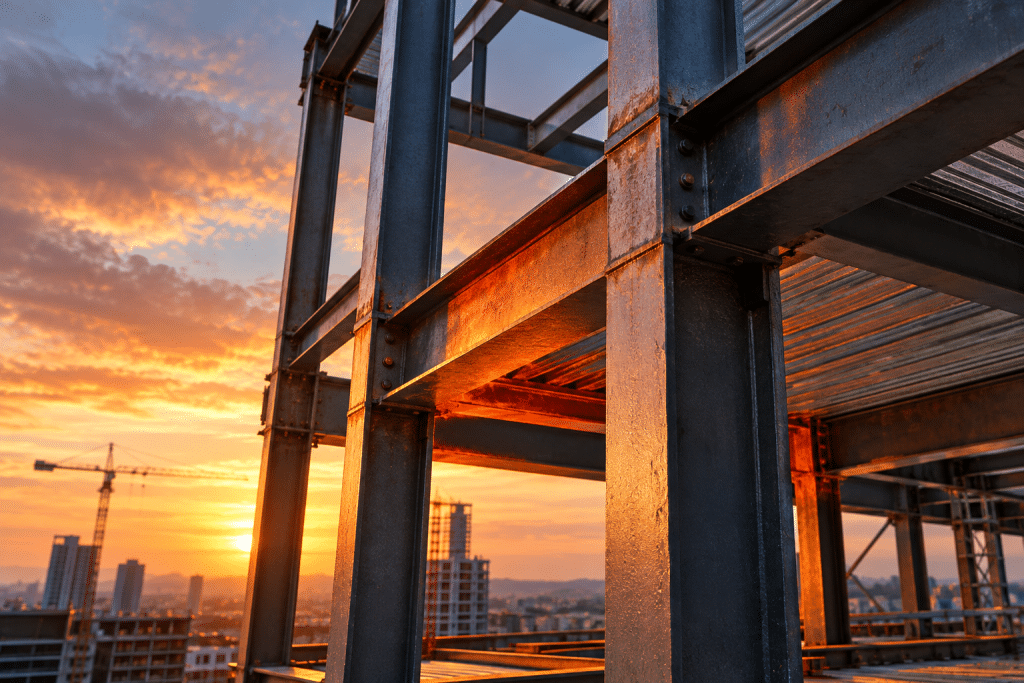
Steel is one of the most widely used materials in modern construction. It’s strong, versatile, and capable of supporting large loads while allowing architects and engineers to design impressive structures. From office buildings and warehouses to shopping centres and apartment blocks, steel forms the backbone of many buildings.
However, despite its strength, steel has a critical weakness when exposed to fire. Without proper protection, structural steel can lose its strength rapidly at high temperatures, potentially leading to structural failure.
This is why fire protection for steel is a fundamental requirement in modern building design. In this article, we’ll explain how steel behaves in a fire and why passive fire protection systems are essential for keeping buildings safe.
How Steel Behaves During a Fire
Under normal conditions, steel has excellent structural properties. It can carry heavy loads and maintain stability even under demanding conditions. But when temperatures rise during a fire, steel begins to weaken much faster than many people realise.
At around 300°C, steel starts to lose some of its strength.
At approximately 550°C, which is known as the critical temperature, structural steel may lose around 50% of its load-bearing capacity.
In a fully developed building fire, temperatures can exceed 800–1000°C, which means unprotected steel can quickly become unable to support the weight it was designed to carry.
When this happens, structural elements such as beams, columns, and floor supports can bend, twist, or collapse.
Why Structural Failure Can Happen Quickly
Steel conducts heat extremely efficiently. Unlike materials such as concrete or timber, it does not provide much natural resistance to fire.
This means that when a fire occurs:
-
Heat spreads quickly through the steel structure
-
Structural members reach critical temperatures rapidly
-
Strength and stiffness decrease significantly
-
The building’s structural integrity may be compromised
In large buildings, this process can happen within minutes if the steel is unprotected.
This is why fire protection systems are essential to slow down the heating process and give the structure time to perform as intended during a fire.
The Purpose of Fire Protection for Steel
The primary goal of fire protection is not to make steel completely fireproof. Instead, it is designed to delay the temperature rise in steel so the structure can continue to support loads for a specified period.
This delay provides several critical benefits:
-
Allows occupants time to evacuate safely
-
Gives firefighters time to control the fire
-
Reduces the risk of structural collapse
-
Helps contain the fire within specific compartments of the building
By slowing down heat transfer to the steel, fire protection systems help ensure that buildings meet required fire resistance ratings such as 30, 60, 90, or 120 minutes.
Passive Fire Protection for Steel
Steel fire protection usually falls under the category of passive fire protection (PFP). Unlike active systems such as sprinklers or alarms, passive systems are built into the structure and work automatically without requiring activation.
There are several common methods used to protect structural steel.
Intumescent Coatings
Intumescent paint is one of the most popular fire protection solutions for steel structures.
When exposed to high temperatures, the coating expands dramatically to form a thick, insulating char layer. This layer slows the transfer of heat to the steel beneath.
Advantages include:
-
Thin, lightweight coating
-
Maintains the architectural appearance of steel
-
Suitable for visible structural elements
Cementitious Fireproofing
Cement-based spray materials are commonly used in commercial and industrial buildings.
These coatings form a thick protective layer around the steel, providing excellent thermal insulation.
Advantages include:
-
Cost-effective for large projects
-
Suitable for hidden structural steel
-
Durable and robust
Fire Protection Boards
Fire-resistant boards made from materials such as gypsum or calcium silicate can be installed around steel beams and columns.
These boards act as a protective barrier that slows heat transfer.
Advantages include:
-
Reliable fire performance
-
Suitable for both structural and architectural applications
-
Provides a clean, finished appearance
Fire Resistance Ratings Explained
Building regulations typically require structural steel to maintain its integrity for a set period during a fire. These fire resistance ratings are usually expressed as:
-
30 minutes
-
60 minutes
-
90 minutes
-
120 minutes
The required rating depends on factors such as:
-
Building height
-
Occupancy type
-
Structural design
-
Local fire safety regulations
The fire protection system must be carefully designed to ensure the steel remains below its critical temperature for the required duration.
Building Regulations and Compliance
In the UK, fire protection for structural steel is governed by Approved Document B of the Building Regulations and supported by various European standards.
These regulations ensure that buildings:
-
Maintain structural stability during a fire
-
Allow occupants sufficient time to escape
-
Prevent rapid collapse
Engineers calculate the required fire protection thickness based on the section factor of the steel member, which considers the relationship between the steel’s exposed surface area and its volume.
This ensures the correct amount of fire protection is applied to each structural element.
Why Fireproofing Steel Is Essential in Modern Construction
As modern buildings become larger and more complex, structural fire protection has become even more important.
Steel frames are commonly used because they allow for:
-
Large open floor spaces
-
Faster construction
-
High strength-to-weight ratios
However, these advantages also mean that protecting steel from fire is critical to the overall safety of the building.
Without fire protection, the strength of steel could reduce rapidly in a fire, increasing the risk of structural collapse.
Final Thoughts
Steel is an incredibly strong and reliable building material under normal conditions, but it is vulnerable to high temperatures during a fire. Without protection, structural steel can lose its strength quickly, putting the entire building at risk.
Fire protection systems such as intumescent coatings, fireproof boards, and cementitious sprays play a vital role in maintaining structural stability and protecting lives.
By slowing the temperature rise in steel, these passive fire protection solutions ensure buildings remain safe long enough for occupants to evacuate and emergency services to respond.
In modern construction, fireproofing steel isn’t just recommended, it’s essential.
For expert advice on fire protection and prevention measures, contact Martyn Young Fireproofing Consultancy on 07585 896648