

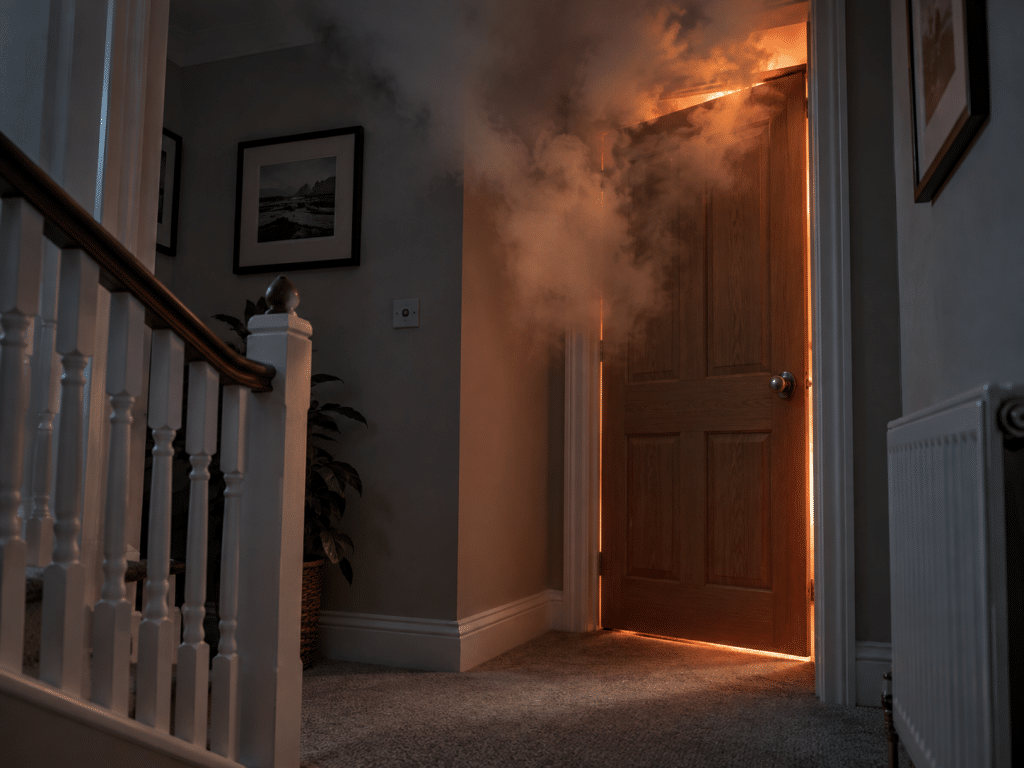
When it comes to fire door safety, many people assume the door itself does all the work. But in truth, it’s the details around the edges, including the seals, that determine whether a fire door performs as intended.
Two types of seals are often used in fire doors: smoke seals and fire seals. While they may look similar at first glance, they serve very different purposes, and using the wrong type (or leaving one out) can seriously compromise a building’s safety.
So, what’s the difference between smoke and fire seals, and do you really need both?
Let’s break it down.
What Are Fire Seals?
Fire seals are made from intumescent material, which is designed to react to heat during a fire.
When the temperature reaches around 180°C, the intumescent material rapidly expands, filling any gaps around the fire door and creating a solid, insulating barrier. This helps contain the fire and prevents it from spreading between compartments.
Key Functions of Fire Seals:
-
Activate during high temperatures
-
Seal door edges to stop the spread of flames and hot gases
-
Help the fire door maintain its integrity rating (e.g. FD30 or FD60)
-
Expand significantly to block gaps and joints
Where They’re Found:
-
Often concealed in the edges of fire doors or door frames
-
May look like thin, rigid strips in a groove or rebated edge
-
Sometimes combined with smoke seals in one strip
What Are Smoke Seals?
Smoke seals (sometimes called cold smoke seals) are designed to block smoke at room temperature, long before a fire becomes fully developed.
Unlike fire seals, smoke seals don’t rely on heat to activate. Instead, they use:
-
Flexible brush strips, or
-
Soft rubber or blade-style fins, to form a tight barrier against smoke passing through the gaps around the door.
This is especially important because smoke can travel long distances quickly, often long before flames are visible.
Key Functions of Smoke Seals:
-
Block cold smoke and toxic fumes in the early stages of a fire
-
Protect escape routes like corridors and stairwells
-
Reduce the risk of smoke inhalation, the leading cause of fire-related deaths
-
Allow air to pass during normal use, but restrict smoke when closed
Where They’re Found:
-
Commonly built into fire door frames or installed as surface-mounted strips
-
Brush or rubber seals along the head and vertical edges of the door
-
Often installed as part of a combined fire and smoke seal strip
Fire Seals vs. Smoke Seals – Key Differences
| Feature | Fire Seals | Smoke Seals |
|---|---|---|
| Activation | React to high heat (180°C+) | Work at room temperature |
| Main Purpose | Block flames and hot gases | Block cold smoke |
| Material | Intumescent (expands with heat) | Flexible brushes or fins |
| When They Work | After fire has started | Before fire reaches high temperatures |
| Typical Form | Rigid strips in a groove | Brush or rubber blade strips |
| Compliance Role | Fire door integrity | Smoke control and escape route safety |
Do You Need Both Fire and Smoke Seals?
In most cases, yes, you do.
Smoke and fire seals are designed to work together, not as alternatives. While fire seals help contain the fire once it’s fully developed, smoke seals provide early protection, buying critical time for people to evacuate.
Many fire door assemblies are tested and certified with combined fire and smoke seals, meaning both are required to maintain the door’s official rating.
You should use both if:
-
Your building is subject to UK fire safety regulations (which most are)
-
You are protecting escape routes or corridors
-
The fire door is required to control both fire and smoke spread
-
You’re upgrading or replacing fire doors in commercial or residential buildings
What Do the Regulations Say?
Under the Regulatory Reform (Fire Safety) Order 2005 and Approved Document B (England and Wales), buildings must be designed and maintained to:
-
Limit fire and smoke spread
-
Protect escape routes
-
Ensure fire doors perform as tested
Smoke seals are specifically required on doors protecting escape routes or in multi-occupancy buildings. Any modification to a fire door, including replacing seals, must maintain the original fire and smoke performance rating.
If a fire door was tested with combined fire and smoke seals, you must use both to remain compliant.
What If You Only Have One or the Other?
If your fire door has:
-
Fire seals only; smoke may still spread dangerously before the intumescent material activates.
-
Smoke seals only; flames and heat will penetrate the door edges once the fire takes hold.
-
No seals at all; the fire door likely won’t meet legal requirements or perform properly in an emergency.
Always check the certification label on the fire door and ensure the correct type of seal is in place. You can often upgrade or retrofit the right seal without replacing the entire door.
Final Thoughts
Fire and smoke seals may be small details, but they serve two crucial and distinct purposes. Smoke seals buy time by slowing the spread of deadly fumes in the early stages, while fire seals contain flames and heat once a fire takes hold.
Used together, they give fire doors their full life-saving potential, protecting escape routes, preserving property, and most importantly, saving lives.
If you’re unsure whether your fire doors are properly sealed, it’s worth getting them inspected. Compliance isn’t just about ticking a box; it’s about real-world safety.
Need Fire or Smoke Seals?
For expert advice on fire protection and prevention, contact Martyn Young Fireproofing Consultancy today on 07585 896648