

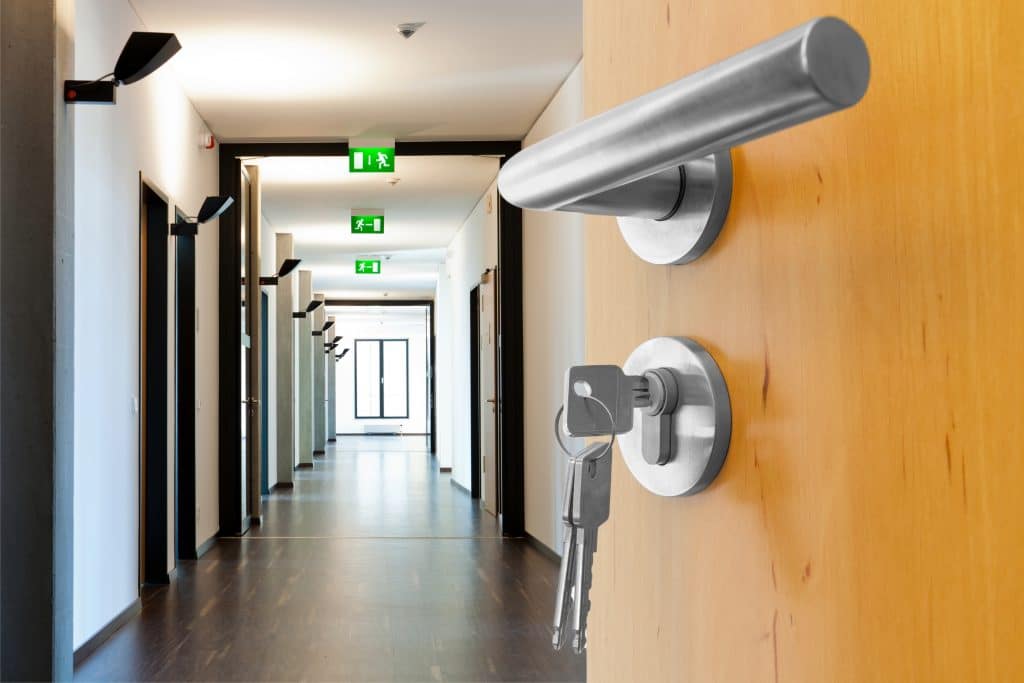
When it comes to fire doors, most people focus on the door itself: the thickness, the fire rating, the seals. But what about the hinges, locks, latches, and other hardware?
These critical components are often overlooked. Yet, during a fire, they can become the weakest points in a fire door assembly, unless they’re properly protected.
That’s where intumescent hinge and lock protection comes in. In this post, we’ll explain what it is, how it works, and why it’s essential for maintaining fire door integrity.
What Is Intumescent Hinge and Lock Protection?
Intumescent hinge and lock protection refers to specially designed intumescent materials (such as pads, wraps, or liners) that are fitted behind or around door hardware, particularly:
-
Hinges
-
Locks
-
Latches
-
Letterplates
-
Door viewers
These materials are passive fire protection products, meaning they remain dormant during everyday use, but expand rapidly when exposed to heat (typically above 180°C) in the event of a fire.
When installed correctly, they seal off the gaps created by routing, recessing, or cutting into a fire door for hardware. This helps maintain the fire resistance of the door as a complete unit.
How Does It Work?
During a fire, the temperature around a door can rise rapidly to over 600°C.
At this point, the intumescent protection activates:
-
Expands up to 10–20 times its original size
-
Fills the space around the hardware cut-out
-
Forms a dense char barrier that insulates and blocks heat, smoke, and flames
-
Reinforces the structural integrity of the fire door core and leaf
Without this protection, the fire can breach the door through unprotected hinges or locks, even if the rest of the door is rated for 30 or 60 minutes.
Why Do Hinges and Locks Need Extra Protection?
To fit locks, latches, and hinges, material must be removed from the fire door. This compromises the fire-resistant core and introduces:
-
Gaps and voids
-
Metal components that conduct heat
-
Weak points in the door’s structure
Although many hinges and locks are “fire-rated” on their own, they are only fire-tested as part of a full fire door assembly, with intumescent protection in place.
That’s why most certified fire door installations include intumescent hinge pads and lock kits as standard.
Is It a Legal Requirement?
Yes, in most cases.
Under UK Building Regulations (Approved Document B), any modifications to a fire door must not reduce its performance. This includes fitting ironmongery.
Certifications like BS 476: Part 22 or BS EN 1634-1 assume that any door hardware has been:
-
Installed exactly as tested
-
With intumescent materials fitted if required
If you install a fire-rated hinge or lock without intumescent protection, you risk:
-
Invalidating the door’s certification
-
Failing a fire risk assessment
-
Non-compliance with The Regulatory Reform (Fire Safety) Order 2005
Where Is Intumescent Protection Typically Used?
Intumescent kits can be used around:
| Component | Protection Type |
|---|---|
| Hinges | Pads fitted behind hinge leafs |
| Locks & Latches | Wraps or cut-to-size liners inside mortices |
| Cylinder Locks | Intumescent sleeves or surrounds |
| Letterplates | Intumescent plates behind flaps |
| Door Viewers | Intumescent sleeves or inserts |
These kits are usually discreet, easy to install, and designed to work alongside standard ironmongery without affecting functionality.
Does Every Fire Door Need Them?
If your fire door has:
-
Rebated hardware
-
Surface-mounted ironmongery that affects the door core
-
Been modified or upgraded
…then yes, intumescent protection is essential.
Even if a hinge or lock claims to be “fire-rated”, always check:
-
Has it been tested with intumescent material?
-
Does the certification require specific installation conditions?
-
Is it being fitted in a door to the same specification as tested?
When in doubt, add the intumescent kit. It’s a small cost for significantly increased safety.
Final Thoughts
Intumescent hinge and lock protection is one of the most overlooked yet vital parts of a compliant fire door installation. These seemingly minor additions play a critical role in preserving the door’s ability to contain fire, protect escape routes, and save lives.
They don’t just tick a regulatory box; they give people more time to escape and reduce the spread of smoke and heat.
If you’re fitting or upgrading fire doors, never skip intumescent kits around ironmongery. When installed correctly, they ensure your fire door performs exactly as it was designed to, when it matters most.
Need Help Choosing the Right Intumescent Protection?
For expert advice on fire protection and prevention measures, contact Martyn Young Fireproofing Consultancy today on 07585 896648